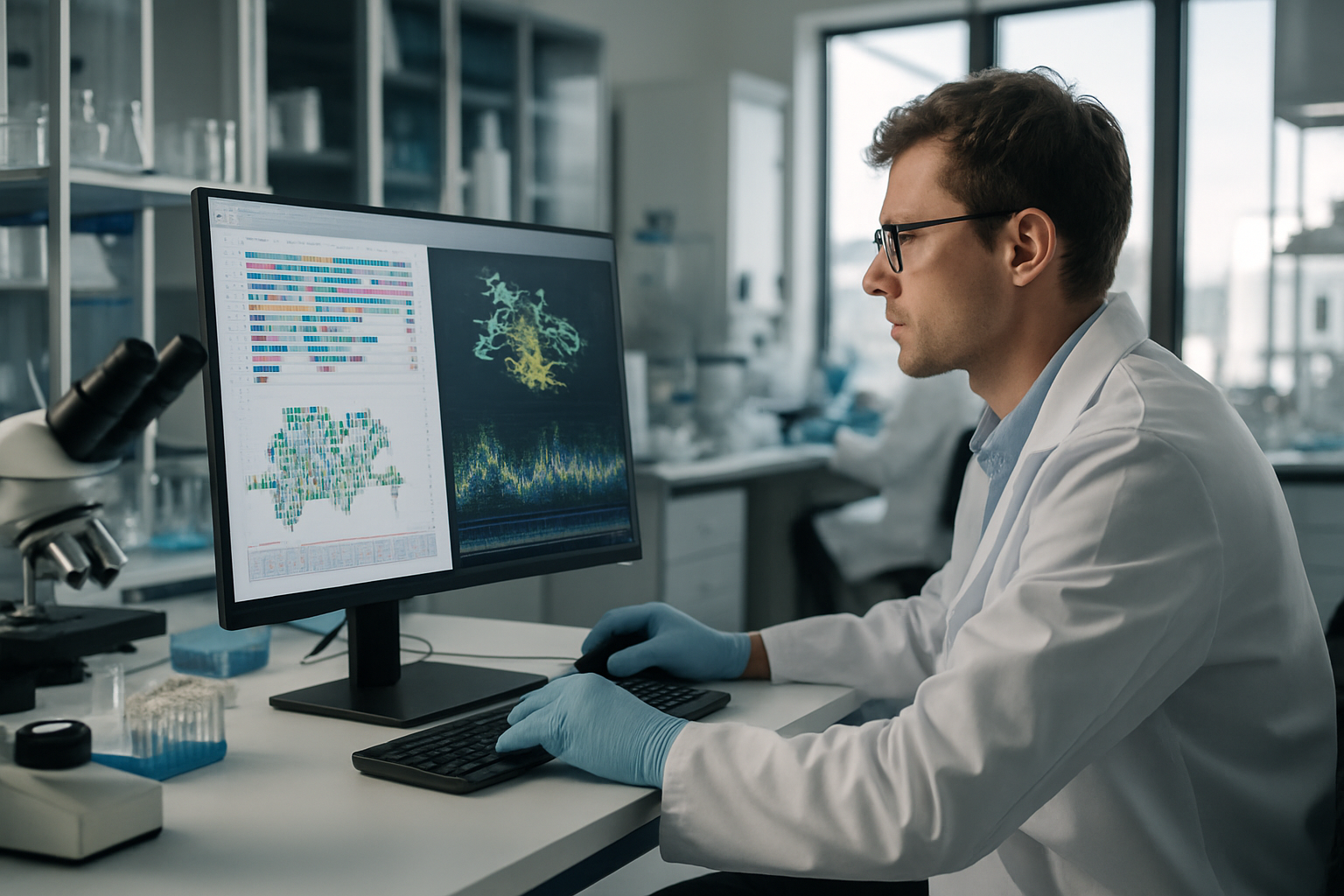
OpenAI unveils GPT-Rosalind, a reasoning model aimed at drug discovery and genomics
OpenAI on April 16, 2026 introduced GPT-Rosalind, a frontier reasoning model designed for life sciences work, marking one of the company’s clearest steps yet into scientific applications beyond general-purpose chat and coding.
GPT-Rosalind targets scientific workflows, not generic chat
OpenAI says the model is built to accelerate drug discovery, genomics analysis, protein reasoning and broader scientific research workflows. The framing matters: this is not being presented as a consumer feature, but as a model aimed at technical users working with complex biological data and research pipelines.
The launch places OpenAI in a more specialized part of the AI market, where the value proposition depends less on conversational polish and more on how well a model can support structured reasoning, hypothesis generation and domain-specific analysis. That kind of positioning is likely to matter to labs, biotech teams and research organizations looking for AI tools that can fit into existing scientific processes.
OpenAI’s research index shows the release alongside recent model work
GPT-Rosalind appears in OpenAI’s research index dated April 16, 2026, alongside other recent work on model behavior and safety. The placement suggests the company is continuing to use its research channel not only for technical publications, but also as a launch point for new product-adjacent capabilities.
OpenAI has been moving quickly across several fronts in 2026, including frontier model releases and safety-related updates. GPT-Rosalind adds a distinct vertical use case to that mix and gives the company a new entry point into life sciences, where AI vendors are competing on accuracy, trust and workflow relevance as much as raw model capability.
Why the life sciences angle matters now
The life sciences sector has become one of the most important tests for commercial AI because the stakes are high and the work is data intensive. If a model can genuinely help researchers reason over genomics or protein structures, it can shorten early-stage analysis and make scientific iteration less manual.
OpenAI has not provided a full technical breakdown in the index entry, so the immediate significance lies in the direction of travel: the company is signaling that its frontier systems are being packaged for narrower, higher-value professional use cases. For biotech and research teams, that raises the practical question of whether OpenAI can turn a broad model platform into a tool that fits real laboratory and discovery workflows.
Source: OpenAI Research Index
Date: 2026-04-16