Google unveils eighth-generation TPUs as AI agent demand pushes cloud infrastructure higher
Google used its Cloud Next 2026 event on April 22 to introduce a new generation of Tensor Processing Units built for the next phase of enterprise AI: training and running large numbers of agents at scale. The company said its eighth-generation chips are designed as a dual system, with one part optimized for training and another tuned for inference, as it pushes deeper into the infrastructure market behind generative AI.
Google’s TPU 8t and TPU 8i are aimed at different AI workloads
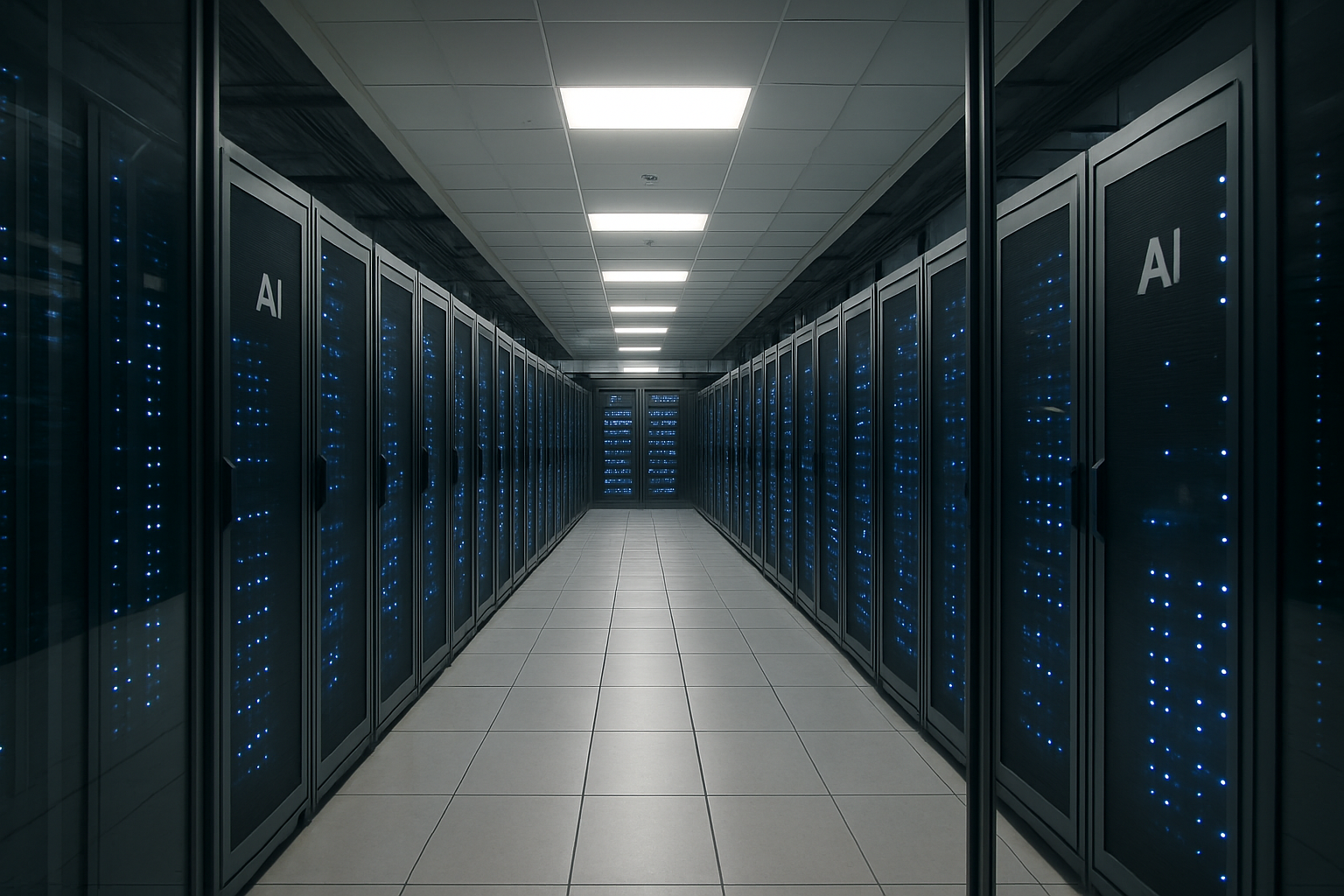
The company said TPU 8t is intended for training and can scale up to 9,600 TPUs and 2 petabytes of shared high-bandwidth memory in a single superpod. TPU 8i is built for inference, connecting 1,152 TPUs in a single pod to reduce latency and support the kind of throughput needed to run millions of agents more efficiently.
Google said TPU 8t delivers three times the processing power of Ironwood and up to twice the performance per watt, while TPU 8i adds more on-chip SRAM to cut response times. The chips will be offered to cloud customers alongside Nvidia GPU instances.
Gemini Enterprise is moving from chatbot software to agent management
Alongside the hardware rollout, Google said it is introducing a Gemini Enterprise Agent Platform meant to help organizations build, govern and optimize large fleets of agents. The pitch reflects a shift in how major cloud providers are framing AI adoption: not as a single model deployment, but as a managed layer of digital workers tied to data, access controls and workflow automation.
Google also said its first-party models now process more than 16 billion tokens per minute through direct API use by customers, up from 10 billion in the previous quarter. The company said more than half of its overall machine learning compute investment in 2026 is expected to go to the cloud business.
Security tools are being bundled with the AI stack
Google also announced a set of agentic threat-detection products as part of an AI-powered cybersecurity platform combining Google Threat Intelligence and Security Operations with Wiz’s Cloud and AI Security Platform. The company said Wiz is launching a new AI Application Protection Platform that provides autonomous protection across code, cloud and runtime environments.
That packaging matters because AI infrastructure is becoming a security problem as much as a performance problem. As companies move agents deeper into production systems, the control plane around those agents — identity, policy, monitoring and threat response — becomes part of the buying decision.
Why the timing matters for enterprise AI
Google’s announcement lands at a moment when cloud providers are racing to prove that AI investment can be translated into usable products, lower latency and higher margins. The technical message is clear: the bottleneck is no longer just model quality, but the cost and speed of running agents continuously across corporate workflows.
By tying new TPUs, Gemini Enterprise and security tooling together in one release, Google is trying to sell a full stack for the agent era rather than isolated AI features. That makes the April 22 rollout less about a single chip debut than about the infrastructure race now defining commercial AI adoption.
Source: Google Blog
Date: 2026-04-22